Hurricane Roof Inspection Miami: What Roofers Look For When You Can Finally Get Up There

A post-hurricane roof inspection Miami homeowners trust starts before the wind drops. The 72-hour window after the storm passes is when the real damage shows. Some failures are visible from the ground. The dangerous ones are not. This guide walks you through what a 30-year crew looks for, where homeowners almost always miss damage, and why the insurance clock starts the moment the storm clears your county. Florida humidity gives wet insulation 48 hours before mold sets in. That clock matters. So does the order in which we walk the roof. The goal of a post-hurricane roof inspection Miami service is documented evidence, not a guess. Here is how the work actually unfolds.

The 72-Hour Window After a Hurricane

The first 72 hours after a named storm clears Miami-Dade are when most homeowners discover damage. Some shows immediately. Some takes three days. The reason for the gap matters.

Why Some Damage Takes Three Days to Show

Wind-lifted shingles or tiles can reseat themselves enough to look fine from the ground. The bond underneath is broken even when the surface looks intact. Three days of normal temperature cycling unsticks the field again. A small rain that follows the hurricane reveals the leak the storm itself did not.

The Difference Between Visible and Functional Damage

Visible damage is what you see: missing tile after storm winds, lifted ridge cap, soffit pulled down. Functional damage is the failure beneath. A roof can look intact and still have a torn underlayment, displaced flashing, or a hairline crack in a deck seam. A storm damage roof inspection finds both layers.

When It Is Safe to Look From the Ground

Walk outside once conditions clear. Stay on the ground. Photograph every elevation with your phone. Pay attention to roof edges, vent stacks, and skylights. Do not climb a ladder. Do not go on the roof. Wet decking and adrenaline are how Miami homeowners get hurt every year.

What Roofers Look For: A Top-to-Bottom Inspection Map

A post-hurricane roof inspection Miami crew runs the same map every time. Ridge down to gutter. Penetrations checked separately. Interior and attic checked last.

Ridge and Hip Caps: First Failure Point

The peak of a roof takes the highest wind pressure during a hurricane. Ridge cap dislodgement is the most common visible failure we see after Cat 1 events. Hip cap displacement runs second. Both expose the underlayment beneath. Both are early warning signs that the deck below took uplift loading.

Field Tiles, Shingles, or Metal Panels

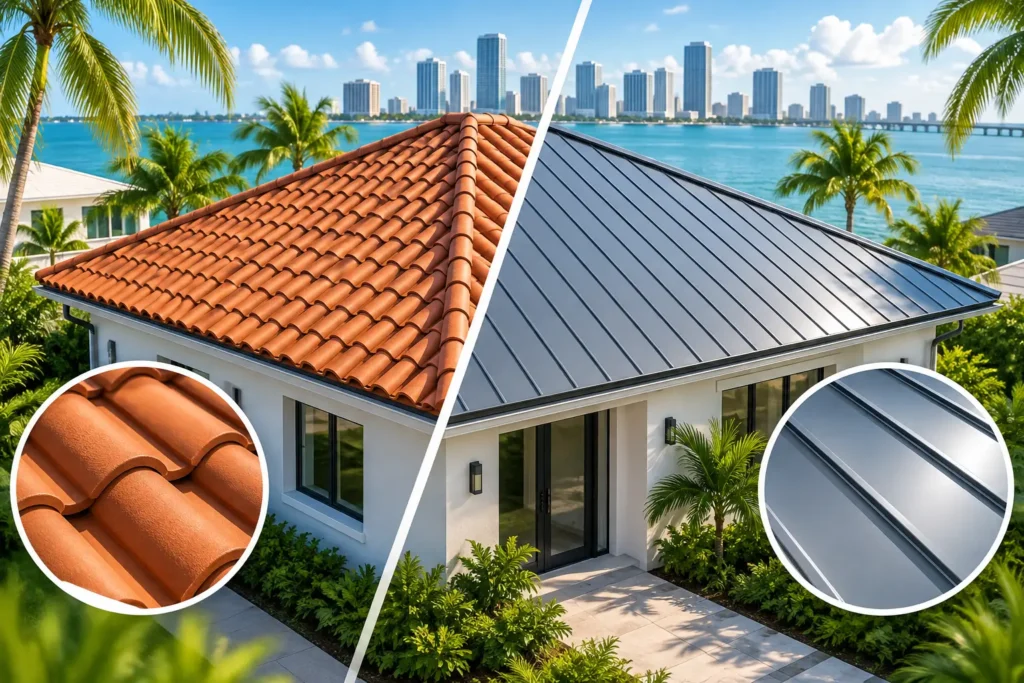
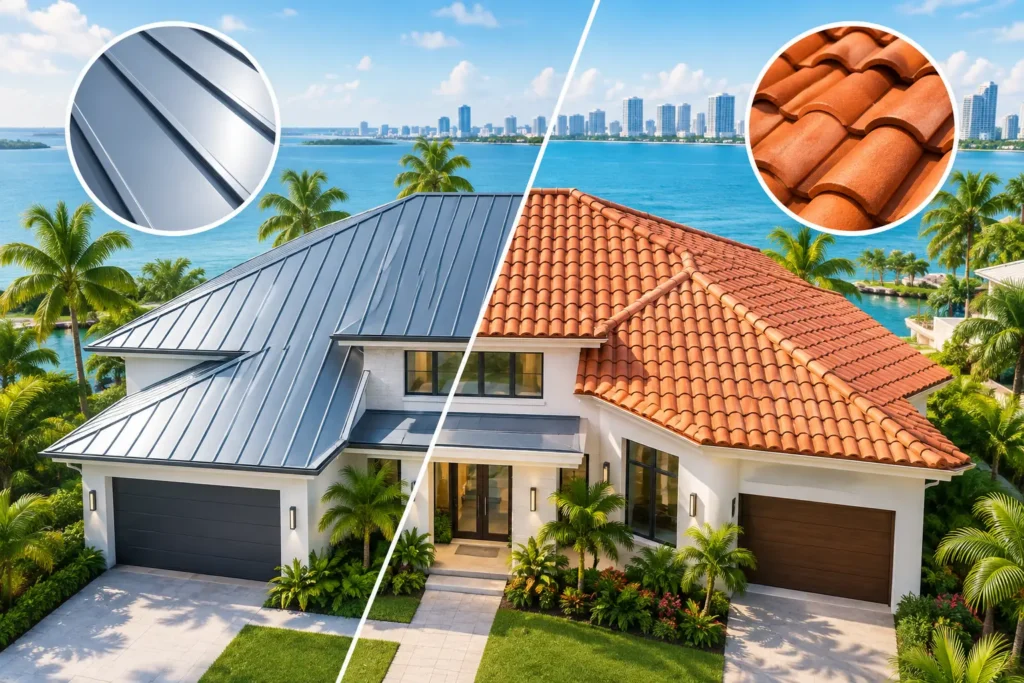
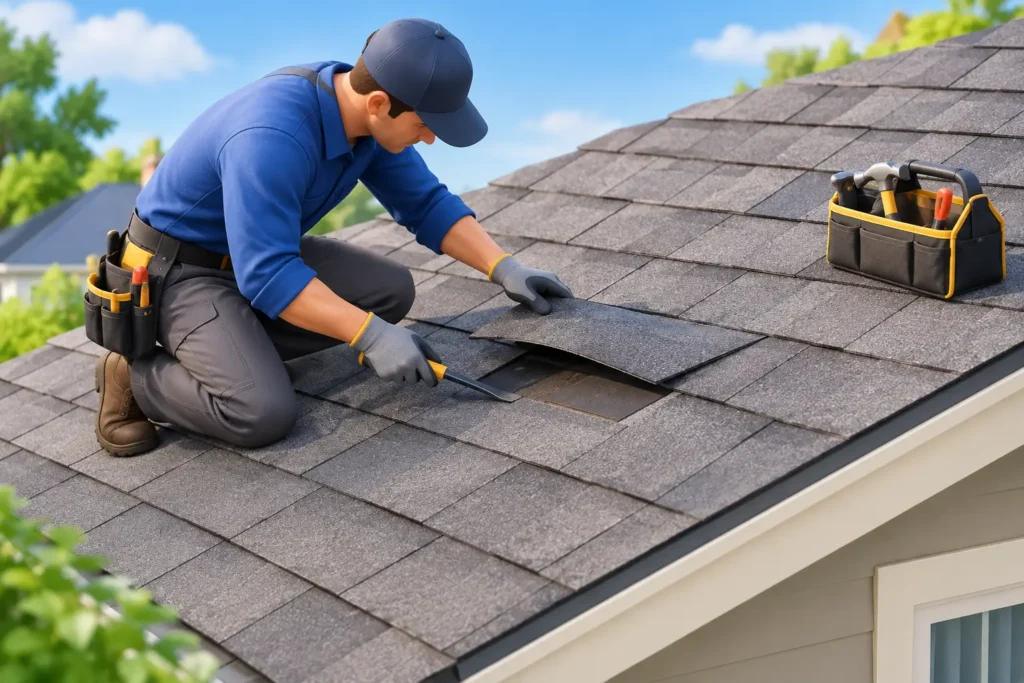
The field of the roof is the main surface area. Look for missing tile after storm winds, lifted shingle courses on the windward face, or buckled metal panels at the seams. Granular displacement on asphalt shingles (bare spots where the protective layer washed off) is a hurricane damage roof signs marker, even when no shingle is missing.

Flashing at Penetrations

Vents, chimneys, and skylights are sealed with flashing. Storm uplift stresses every flashing detail. Lifted step flashing on a chimney is the most common hidden leak source after a hurricane. Drip edge displacement at the eaves is another. Both fail silently for weeks before the leak shows inside.

Fascia and Soffit: The Damage Homeowners Always Miss

Wind pushes up under the soffit and pulls the fascia out from the wall. Once the soffit gives, wind-driven rain enters the attic directly. We see this on almost every post-storm route in older Miami-Dade neighborhoods. If your soffit panels are sagging, missing, or rattling in a normal afternoon breeze, that is hidden hurricane damage roof homeowners often catch too late. We carry a fascia and soffit repair in Miami crew on every dispatch for exactly this reason.

Gutters and Drip Edge: Secondary Indicators

A gutter pulled away from the fascia is a sign the fascia itself took uplift. A drip edge bent up at the eave is a sign the wind crawled under the lower shingle course. Neither is the headline damage. Both are flags that point to bigger issues above.

Interior Signs That Mean Hidden Damage

The attic and ceilings tell you what the roof did not show outside. This is where the silent failures surface.

Daylight Through the Attic

If you can see daylight through your attic roof boards, you have a hole. Even a pinhole is a leak waiting for the next rain. Time-stamp a photo and call. This is one of the cleanest wind damage roof signs a homeowner can spot without climbing.

Wet Insulation and the Mold Clock

Florida humidity gives wet insulation 48 hours before mold sets in. Touch the insulation near any roof penetration. If it feels damp, the leak is active or recent. An attic check after hurricane conditions clear should look at insulation, decking, and rafter undersides. Use a flashlight.

Stains on Drywall

A new water stain on a ceiling means a roof breach upstream. A spreading stain means active water. A yellowing stain that has dried means the leak stopped but the damage is done. Where the stain appears does not always match where the roof failed. Water travels along rafters before dropping. The roofer follows the path backward.

The Tools a Professional Brings That You Do Not Have

A post-hurricane roof inspection Miami crew shows up with measurement tools homeowners do not own. The tools turn a guess into a documented finding.

Moisture Meter

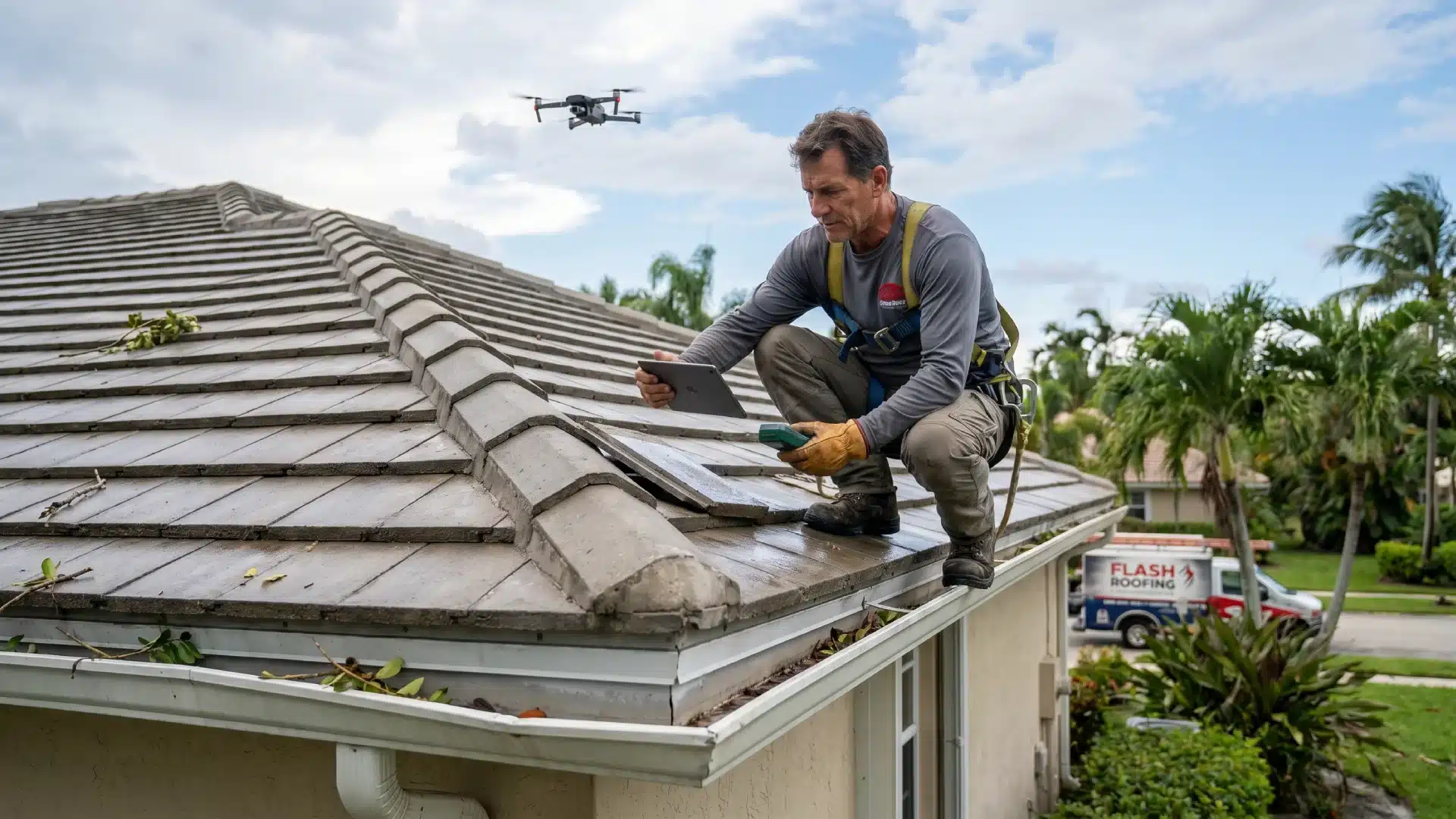
The moisture meter reads water content inside materials. Dry roof decking reads under 12 percent. Wet decking reads above 18 percent. Anything in between means water moved through recently and is drying. The meter tells us where to open the ceiling, even when nothing is visibly wet.

Infrared Camera

Infrared shows temperature differences. Wet insulation runs cooler than dry. A trained eye on an infrared image can trace water tracks across an entire attic without lifting a single bat of insulation. We use it on every post-storm inspection where interior signs suggest hidden moisture.

Drone Survey

Tile and steep-pitch roofs are dangerous to walk in the days after a hurricane. A drone survey gives us high-resolution photos of every elevation without putting a crew member on a wet tile field. For tile homes in Coral Gables, Pinecrest, and Coconut Grove, drone is the safe default.

What Goes in the Inspection Report

The post-hurricane roof inspection Miami report is the document that protects your insurance claim. It needs to be specific, dated, and photographed.

Scope of Loss Documentation

Every damaged component gets a line item: location, type of damage, recommended fix, and estimated severity. Adjusters read the scope of loss before they read anything else. A vague report shrinks your claim. A specific one supports it.

Repair vs. Replace Recommendation

The report should state, with reasoning, whether the damage justifies repair or full replacement. A roofer who recommends replacement without explaining why has not done the inspection properly. A roofer who recommends repair when replacement is the right call has missed something or is underbidding.

Dated, Geo-Tagged Photos

Modern phones tag every photo with date, time, and GPS. Use that. The report should include the original tagged images, not edited versions. Tagged photos are evidence. Edited photos can be disputed.

Mistakes That Cost Miami Homeowners Their Coverage

After every named storm, the patterns repeat. The homeowners who lose claim money make the same three mistakes.

Waiting Too Long

Florida policies have notice-of-loss deadlines. Some run 60 days. Some run 90. Wait longer than your policy allows and the claim dies. Schedule the post-hurricane roof inspection Miami appointment in the first week after the storm clears.

Letting a Storm Chaser Do the First Inspection

Out-of-state crews knock on doors after every major Atlantic event. They offer free inspections. They take photos. They submit a scope of loss with their company name on it. When they leave town, the warranty leaves with them. Stick with a local storm damage roofing contractor near me who has been licensed in Miami-Dade through multiple storm seasons.

Signing Anything Before Reading It

An assignment of benefits, a contingency agreement, or a contract with vague scope language can transfer your insurance rights to a contractor you just met. Read every line. Get a second opinion if needed.

Expert Insight

With over 30 years inspecting Miami-Dade roofs after Andrew, Wilma, Irma, and every smaller storm in between, the pattern is consistent. Homeowners who call within the first week of a named storm get appointments. Homeowners who wait two weeks join a queue that stretches into next month. The damage does not wait for the queue. The roofs we have inspected after Irma in 2017 told us which 1990s tile installs were doomed and which would hold for another decade. The drone footage from those weeks is still in our archives. We brought that knowledge to every inspection since.

Frequently Asked Questions

How soon should I have my roof inspected after a hurricane in Miami?

Within the first week after conditions clear. Florida policies have notice-of-loss deadlines (usually 60 to 90 days), and storm damage roof inspection crews book solid in the weeks following any named event. Calling early gets you on the schedule before the queue stretches into the next month.
Lifted ridge or hip caps, granular displacement on shingles, sagging soffit panels, wet insulation in the attic, daylight visible through roof boards, and new stains on interior ceilings. Hidden hurricane damage roof failures often show up three days after the storm rather than during it. The 72-hour window matters.
Yes, after any Category 1 or stronger storm that passed your neighborhood. Visible damage is the headline. Functional damage (torn underlayment, displaced flashing, compromised deck) is invisible from the ground and from inside the house. A professional inspection finds the second layer before the next rain reveals it.
Most Florida policies cover documented post-storm inspections as part of the mitigation process, especially when followed by a claim. Save the inspection report and the photos. Talk to your adjuster about reimbursement protocols before you schedule. Coverage specifics depend on your carrier and policy language.
A thorough single-family residential inspection runs 60 to 90 minutes on the ground, plus another 30 to 45 minutes in the attic and writing the report. Drone surveys on tile or steep-pitch roofs add another 20 minutes. Allow two hours total for the appointment.

Get the Inspection Before the Queue Builds

The fastest way to lose insurance coverage on storm damage is to wait. A post-hurricane roof inspection Miami appointment in the first week after the storm preserves the claim timeline, catches hidden damage before the next rain, and gives your adjuster the documented scope of loss they need.

For a documented professional roof inspection after any named storm, call Flash Roofing at 786-237-9440. Licensed, insured, on Miami-Dade roofs through every Atlantic hurricane since Andrew. 59 five-star Google reviews from homeowners we have walked through this same conversation. Save the number before you need it.

Disclaimer: All pricing provided is for informational purposes only. Actual costs will vary based on specific project requirements and property conditions. Reach out to us for a free, personalized estimate.

Found this guide helpful? Share this article:

Facebook
WhatsApp
Twitter
LinkedIn
Pinterest